
UT Launches Knoxville Quantum Accelerator To Advance Tennessee’s Future
Insider Brief
- The University of Tennessee launched the Knoxville Quantum Accelerator (K-Quantum) to strengthen East Tennessee’s role in quantum technology research, commercialization, workforce development, and economic growth.
- K-Quantum supports Tennessee’s $43 million quantum strategy and includes plans for a 100,000-square-foot quantum foundry, a hybrid quantum-classical computing hub, and expanded partnerships with organizations including Oak Ridge National Laboratory, TVA, CGI, and IonQ.
- The initiative will expand UT’s quantum research capabilities through new faculty hires, startup incubation programs, and investments designed to accelerate the transition of quantum technologies from laboratory research to commercial applications.
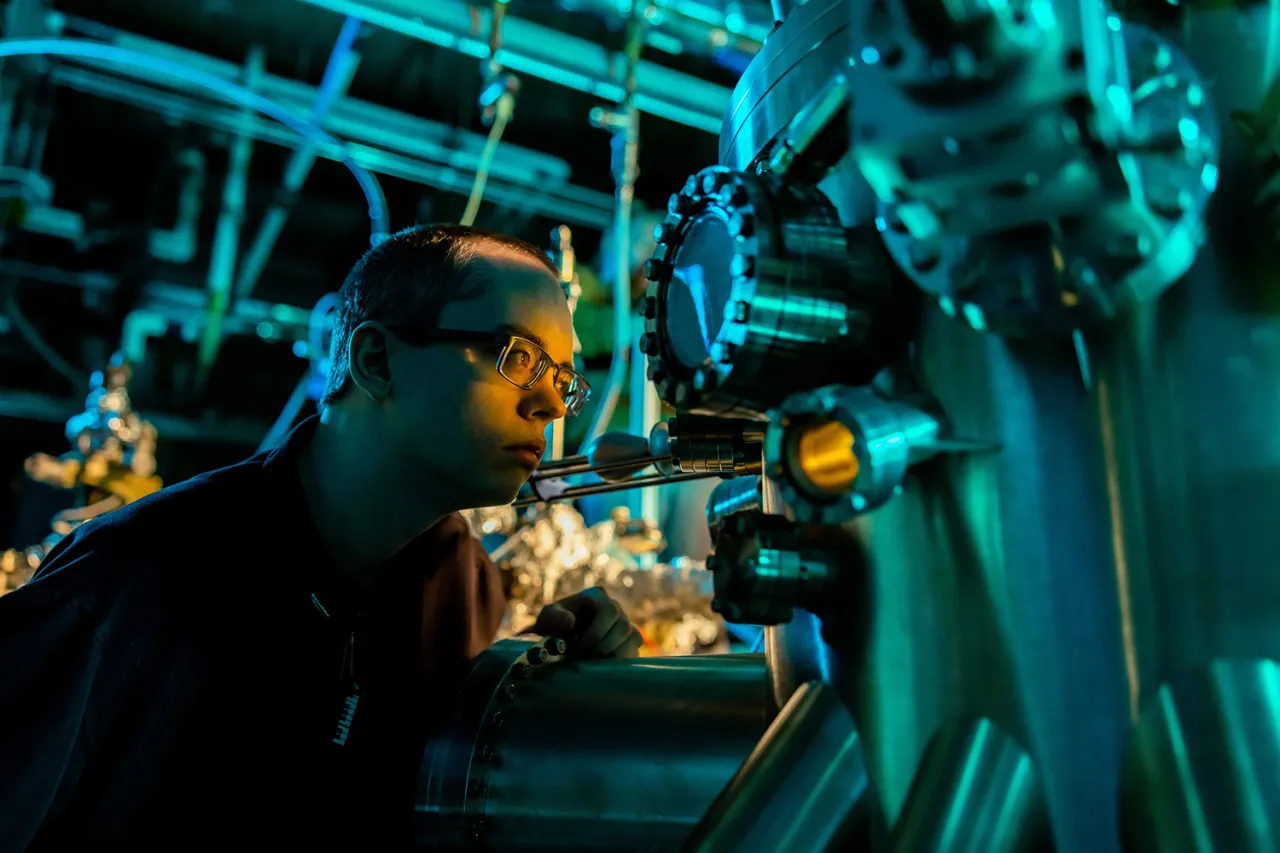
- Image: A student conducts an experiment in the Molecular Beam Epitaxy core facility at UT. (UT)
PRESS RELEASE — The University of Tennessee, Knoxville, is launching the Knoxville Quantum Accelerator, also known as K-Quantum, to advance the region’s position as a leader in quantum technologies and systems.
Unlike the digital computing systems we rely on today, quantum systems use elements of quantum mechanics — the complex behavior of atoms and subatomic particles — to process vast amounts of information quickly and in new ways. Leveraging those properties enables breakthroughs in applications ranging from drug discovery and advanced manufacturing to cryptography and optimization.
As UT partners with other regional innovation powerhouses including Oak Ridge National Laboratory, TVA, CGI and IonQ that are deepening their investments in the quantum frontier, East Tennessee is poised to translate the potential of quantum technologies into tangible economic benefits for companies and communities across the state.
“The collaboration and partnerships at the center of K-Quantum will drive innovation and position both our university and our region as power players in the future of quantum systems,” said Chancellor Donde Plowman. “Leveraging our expertise and capabilities to develop solutions and opportunities in Tennessee is core to our mission as the state’s flagship land-grant university.”
K-Quantum supports the Tennessee Quantum Initiative, Governor Bill Lee’s new $43 million strategy to leverage research and innovation strengths statewide to recruit and launch new Tennessee companies, expand durable high-wage job creation, and advance Tennessee’s leadership in sectors such as advanced manufacturing, life sciences, and logistics. Complementing investments made over more than a decade by UT, ORNL, the city of Chattanooga, EPB, and UT Chattanooga, the initiative ensures that Knoxville plays a strategic role along with Chattanooga and Oak Ridge in the region’s quantum technology development.
“The Knoxville Quantum Accelerator represents the kind of bold, forward-thinking innovation that will fuel new company creation, attract top talent and drive long-term economic growth,” said Braden Stover, senior advisor to the commissioner for nuclear and quantum strategy in the Tennessee Department of Economic and Community Development. “TNECD is proud to support this effort in alignment with the Tennessee Quantum Initiative and believe it will strengthen Tennessee’s leadership in quantum technologies while complementing the state’s broader efforts to expand this infrastructure statewide.”

Growing a quantum technology workforce to advance Knoxville’s research momentum
UT researchers are already using quantum phenomena to encode, sense, process and transmit information. Their innovations are enabling faster and more secure communication networks, medical imaging, ultra-precise sensing and computing systems far more powerful than today’s most advanced supercomputers. K-Quantum will support the development of an ecosystem that advances both fundamental discovery and applications, driving innovation and producing a workforce critical to Tennessee’s economic growth.
“We have long believed that quantum research and development is the next innovation frontier and that Tennessee, and Knoxville in particular, is perfectly positioned to leverage the technology to drive our innovation economy,” said Mike Odom, president and CEO of the Knoxville Chamber. “Our community’s assets, along with our history of deep tech leadership, provide us with a unique opportunity to build a quantum ecosystem that has significant economic impact.”
UT is already a world leader in quantum materials. More than 30 faculty members and hundreds of students perform world-class research in quantum materials with support from the federal government and industry partners, while 10 other faculty advance quantum hardware and software in collaboration with industry and federal organizations. With investments from the chancellor’s preeminent faculty hiring initiative, K-Quantum will add up to 10 new faculty members with expertise spanning quantum hardware and software over the next four years. UT-ORNL Governor’s Chair for Quantum Devices Deep Jariwala, an expert in quantum devices, will join UT from the University of Pennsylvania in January 2027.
“CGI is committed to investing in the East Tennessee region through high-value careers, university partnerships, and workforce development programs that prepare talent for the future of quantum and AI-enabled industries,” said Matt Kittrell, director of consulting at CGI. “K-Quantum represents the kind of public-private collaboration that positions Tennessee for long-term economic growth and technology leadership. We are excited to help bridge research, innovation and commercialization to ensure Tennessee remains competitive in the rapidly evolving global technology landscape.”
Investing in next-generation facilities to accelerate commercialization
Research at this level requires facilities as cutting-edge as the scientists who drive it. K-Quantum will spur investments in a new 100,000-square-foot quantum foundry to be built at the UT Research Park at Cherokee Farm, adjacent to the university’s Institute for Advanced Materials and Manufacturing. K-Quantum will also support development of a next-generation hybrid quantum and classical computing hub to be housed in Knoxville’s new Maplehurst Innovation District. Key to the success of both facilities is the co-location of faculty and students with private-sector collaborators, ensuring that Tennessee companies inspire UT research and accelerate the path from research and discovery to products and services that support the creation of high-wage jobs and the success of Tennessee firms. With a presence in both facilities, UT’s Spark Innovation Center will help incubate and accelerate quantum technology startups with support from partners including the City of Knoxville, TVA, and the U.S. Department of Energy.
“The Maplehurst Innovation District is especially exciting because it creates a new gateway connecting our downtown and the UT campus — a place where students, researchers, startups and companies can work side by side to turn discovery into opportunity,” said Knoxville mayor Indya Kincannon. “This initiative reflects our shared commitment to building a stronger innovation economy that attracts and retains talent, supports high-wage jobs and creates pathways for economic mobility across our community.”
The state and region are uniquely positioned to translate quantum science from theory into real-world applications and impact. From advancing quantum computing and secure communications to accelerating breakthroughs in materials science and engineering, K-Quantum will supercharge Tennessee’s growing quantum technology ecosystem, where private-sector ambitions, university talent, and federal and state governments intersect to ensure that Tennessee plays a pivotal role in shaping the field’s global economy for years to come.