
NVision Selected for EuroHPC Quantum Grand Challenge With Spin-Qubit Project
Insider Brief
- NVision Quantum Technologies has been selected as one of 13 companies for the EuroHPC Joint Undertaking’s Quantum Grand Challenge to develop a roadmap for scaling its PIQC spin-qubit architecture.
- The four-month QOSMOS project will assess NVision’s photon-interfaced spin-qubit technology and define hardware, software and integration milestones toward an error-corrected quantum computing platform.
- QOSMOS will receive €293,455 in EU funding and initially focus on quantum simulation applications in chemistry and pharmaceutical research.
PRESS RELEASE — The EuroHPC Joint Undertaking has selected NVision Quantum Technologies as one of 13 companies to receive funding under its Quantum Grand Challenge, an EU program aimed at helping Europe turn its strength in quantum research into industrial-scale, commercially competitive technologies. Of the three German companies selected, NVision is the only one pursuing a spin-qubit architecture.
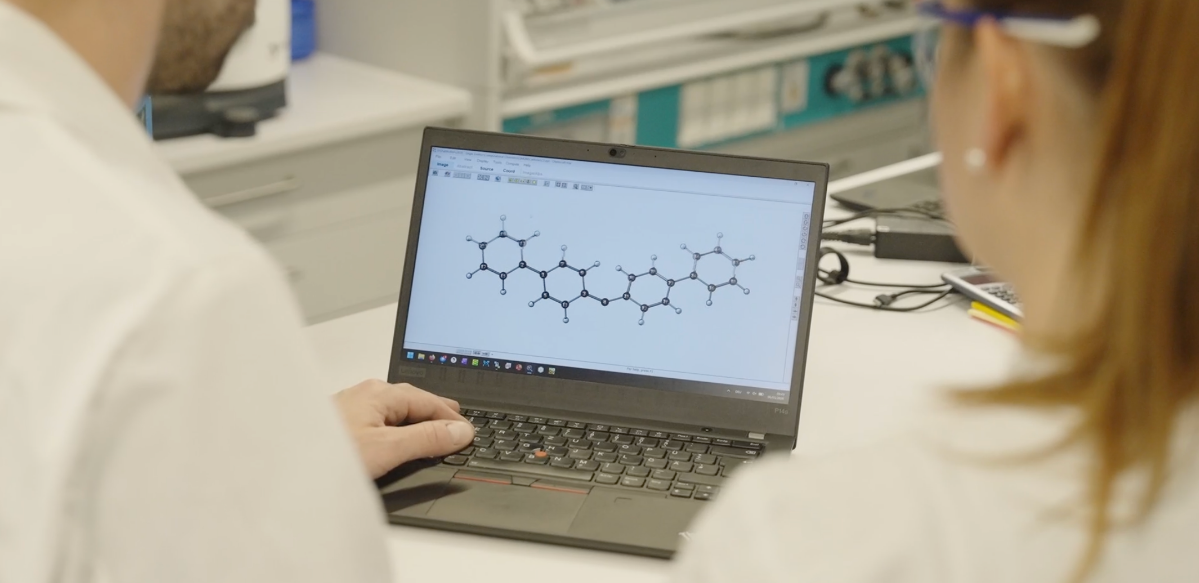
Building on its expertise in controlling quantum spins in organic molecules, NVision has developed PIQC, a photon-interfaced spin-qubit architecture, combining the performance advantages of spin qubits with the unique connectivity of photonics. While conventional spin-qubit approaches typically rely on local interactions between neighboring qubits, PIQC is designed to connect qubits through photonic integrated circuits, providing a path toward chip-integrated, modular systems with all-to-all connectivity.
“Europe has the science, talent and industrial capabilities to lead in quantum computing. The challenge now is to turn those strengths into quantum systems that can actually scale, be manufactured and compete globally,” said Dr. Sella Brosh, CEO and Co-Founder of NVision Quantum Technologies. “As we see it today, photonic connectivity is the only viable path to scaling quantum computers to the size required for fault-tolerant operation. That is why we built connectivity into our architecture from the outset, rather than treating it as a problem to solve later. This selection is an important step toward turning that architecture into a scalable, fault-tolerant quantum computing platform that can be built and manufactured in Europe.”
Through QOSMOS, short for “Quantum Computers based on Spin Qubits in Organic Molecules,” NVision will develop the technical and financial roadmap for scaling PIQC toward an integrated, error-corrected quantum computing platform. The four-month project will benchmark the current technology, define hardware, software and integration milestones, and explore high-value applications with an initial focus on quantum simulation for chemistry and pharmaceutical research. The architecture is designed to integrate with established photonic and semiconductor manufacturing technologies and, in the future, operate alongside European high-performance computing infrastructure.
About The Quantum Grand Challenge
The Quantum Grand Challenge is designed to help promising European quantum technologies move from scientific development toward industrial-scale systems. Phase 1 supports selected companies in developing the technical and financial roadmaps needed for scale-up. The most promising projects can then apply for long-term venture debt financing from the European Investment Bank to support the next stage of commercial and industrial development.
EuroHPC’s Governing Board approved the selected projects on June 19, 2026 (Decision No. 31/2026) following an independent evaluation process. Thirty proposals were submitted, with 13 projects selected for funding on the main list and three placed on a reserve list.
QOSMOS will receive €293,455 in EU funding for its four-month Phase 1 project once the grant agreement, currently in preparation, is signed.