
UT Names New Governor’s Chair for Quantum Devices
Insider Brief
- The University of Tennessee, Knoxville has appointed Deep Jariwala as the UT-ORNL Governor’s Chair for Quantum Devices, starting January 2027.
- Jariwala will lead research in quantum materials and next-generation microchips, focusing on improving efficiency in AI and electronic systems.
- His role strengthens collaboration between UT and Oak Ridge National Laboratory, supporting research, commercialization, and student development.
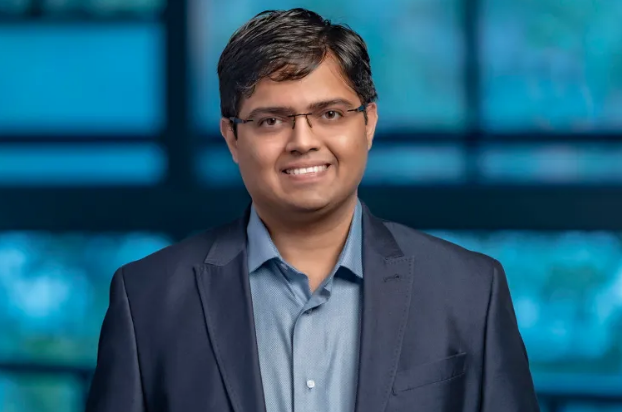
PRESS RELEASE — The University of Tennessee, Knoxville, welcomes Deep Jariwala, a leading scholar in quantum materials and next-generation electronic devices, as the UT-Oak Ridge National Laboratory Governor’s Chair for Quantum Devices. Jariwala, who will hold a joint appointment in UT’s Tickle College of Engineering and at ORNL, will officially join both institutions in January 2027.
The Governor’s Chair program works to align the strengths of both UT and ORNL to advance research and talent development and to attract exceptionally accomplished researchers to the region.
“Recruiting Governor’s Chairs and other preeminent faculty is central to our efforts to elevate the University of Tennessee, Knoxville,” said Chancellor Donde Plowman. “This appointment strengthens our ability to grow in emerging areas like quantum science and engineering while leveraging our partnership with ORNL to create opportunities for students and faculty that no other university can offer.”
Jariwala is joining UT after nine years at the University of Pennsylvania, where he was most recently associate professor and Peter and Susanne Armstrong Distinguished Scholar in the Departments of Electrical and Systems Engineering and Materials Science and Engineering.
Translating materials research into next-generation microchips
Jariwala studies novel materials that can be used to create the chips of the future for computing, sensing and electronic devices that use artificial intelligence.
Powering AI requires tremendous amounts of energy. Jariwala seeks to make AI more efficient by improving the microchips that run and train AI algorithms. This can be done through two broad approaches: by structuring chips to be more like the human brain, which is roughly 1,000 times more efficient than today’s AI hardware, or by employing the unique physics of quantum materials in computing.
“Both approaches are rooted in novel materials and the physical phenomena in those materials,” he said.
When Jariwala joins UT, the university will have faculty working at every step of chip development, from basic materials research to designing and fabricating new chips to using them in real-life applications.
As co-founder of start-up company Agni Semiconductor, Jariwala will contribute to UT’s culture of faculty entrepreneurship. “Completing the arc of translation results in something that can be made at scale and commercialized,” he said, noting Tennessee’s supportive environment for entrepreneurs and small businesses. “I hope to spin out more new companies from UT.”
Enabling collaboration and a competitive edge
Jariwala will establish a new research laboratory for material deposition and characterization at UT’s Institute for Advanced Materials and Manufacturing. His lab will be located in the UT Research Park at Cherokee Farm, a hub for collaboration between UT, ORNL and industry partners.
“I envision a constant exchange of people and information between UT and ORNL,” Jariwala said. “We will leverage the core strengths and facilities of both institutions to open new directions in our research.”
Jariwala will involve both undergraduate and graduate students in his research, with the goal of increasing their competitiveness for jobs and graduate programs. At the University of Pennsylvania, he was honored more than once by the student body for exceptional mentorship of undergraduates.
“We are thrilled to welcome Dr. Jariwala to UT,” said Deb Crawford, vice chancellor for research, innovation, and economic development. “His work will build on our existing expertise in quantum materials and will help us expand our leadership in artificial intelligence. The partnership with ORNL multiplies the impact of both institutions for the state of Tennessee and for the country.”
Jariwala is widely recognized for his work and has earned awards and honors from organizations such as the American Physical Society, IEEE and Optica. He has authored more than 200 peer-reviewed journal and conference publications and currently serves as associate editor for the American Chemical Society’s Nano Letters journal.
Before his time in Pennsylvania, Jariwala spent two years at the California Institute of Technology as a Resnick Prize Postdoctoral Fellow. He earned his Ph.D. in materials science and engineering from Northwestern University and an undergraduate degree in metallurgical engineering from the Indian Institute of Technology, Banaras Hindu University.