
Pasqal Delivers Neutral Atom QPU to Italy’s CINECA
Insider Brief
- Pasqal delivered a 140-qubit neutral atom quantum computer to CINECA in Bologna, strengthening Italy’s hybrid HPC–quantum infrastructure under the EuroHPC Joint Undertaking program.
- The system will be integrated with the Leonardo pre-exascale supercomputer to enable hybrid workflows combining quantum processing with large-scale classical HPC resources.
- The installation, co-funded by EuroHPC JU and Italy’s Ministry of University and Research through ICSC, expands Europe’s sovereign quantum computing infrastructure and marks Pasqal’s third deployment under the EuroHPC initiative.
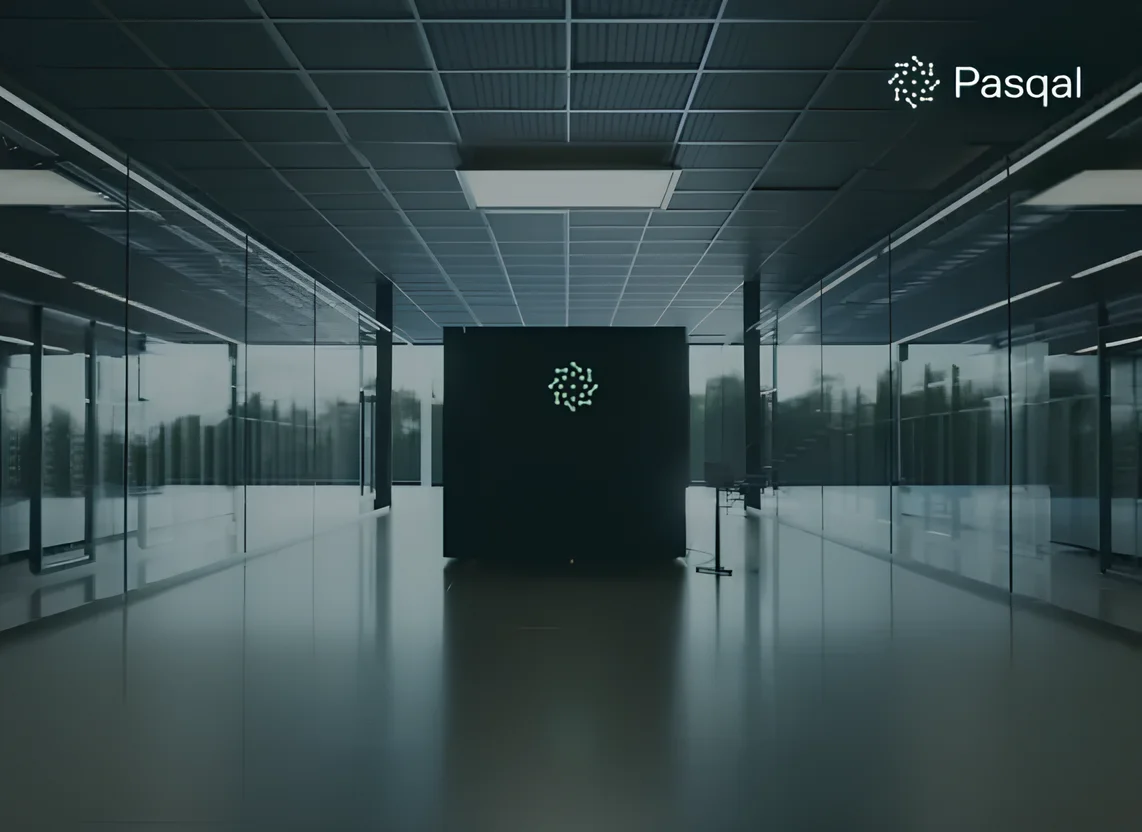
PRESS RELEASE — A 140-qubit neutral atom quantum computer developed by Pasqal has arrived at the DAMA Emilia-Romagna Technopole in Bologna, at the site of CINECA, Italy’s largest public supercomputing operator and a member of ICSC – Italian Center for Research on High Performance Computing, Big Data, and Quantum Computing, making the center even more powerful.
The new quantum computer is co-funded by the EuroHPC Joint Undertaking and, through ICSC, by the Italian Ministry of University and Research, which has been investing for years to make Italy a strategic hub of innovation and a leader in artificial intelligence and supercomputing in Europe and worldwide. This installation fits, in fact, into the broader European plan to develop a sovereign infrastructure of hybrid systems that combine high-performance computing (HPC) and Quantum Computing to provide researchers and SMEs with the computing capabilities needed to tackle increasingly complex scientific and industrial challenges in key sectors of the European economy.
The system delivered to Italy is a neutral atom quantum computer with over 140 qubits, engineered for tight integration with the Leonardo pre-exascale EuroHPC supercomputer, one of the world’s most powerful HPC platforms. This hybrid architecture will allow users to seamlessly offload specialized workloads – such as complex optimization problems, advanced materials simulation, and machine learning tasks – to the QPU, while relying on Leonardo for classical processing and large-scale data handling.
“Thanks to the clear strategic vision of the Ministry of University and Research, particularly Minister Anna Maria Bernini’s, synergistic with the European strategy for the development of quantum computing, and its ongoing commitment and support to implement it, Italy can now claim to be at the forefront of advanced computing capabilities at global level”, said Antonio Zoccoli, President of the ICSC Research Center. “When the integration of the Pasqal quantum computer with Leonardo becomes operational in the coming months, the national scientific community and industry will have computing resources at their disposal that will strengthen their competitiveness and be a useful tool for sustainable growth”.
This deployment contributes directly to Europe’s ambition to foster hybrid computing systems adoption across the Union. The integration of the system with Leonardo is expected to become fully operational and available to the academic and industrial research communities in the coming months.
Pasqal, a global leader in quantum computing, co-founded by Physics Nobel Prize winner Alain Aspect, is already operating two quantum devices under the EuroHPC JU project, at CEA/GENCI in France and Forschungszentrum Jülich (FZJ) in Germany. With the Italian installation, Pasqal now powers three of the eight quantum computers deployed under the EuroHPC JU, confirming its position as a key technology leader in the provision of European quantum computing infrastructure and reinforcing European supply chain with pioneering quantum computing capabilities.
“The delivery of this QPU to CINECA is a new milestone for European quantum computing,” said Loïc Henriet, CEO at Pasqal. “By coupling our neutral atom quantum technology with Leonardo, CINECA is enabling researchers to explore computational frontiers that were previously out of reach. This deployment further reinforces Pasqal’s role as a strategic actor to deliver Europe’s hybrid HPC–quantum federated infrastructure in the ground.”