
Horizon Quantum To Acquire IonQ 256-Qubit Trapped-Ion System
Insider Brief
- Horizon Quantum Holdings Ltd. signed a strategic agreement with IonQ to acquire a 256-qubit trapped-ion system, expanding its push toward practical quantum advantage.
- The 6th-generation IonQ system features 256 qubits, 99.99% gate fidelity, and all-to-all connectivity, enabling more accurate and flexible computation for complex applications.
- The addition of trapped-ion hardware alongside superconducting systems supports Horizon Quantum’s goal of building a hardware-agnostic software platform with advanced runtime capabilities for hybrid quantum-classical programming.
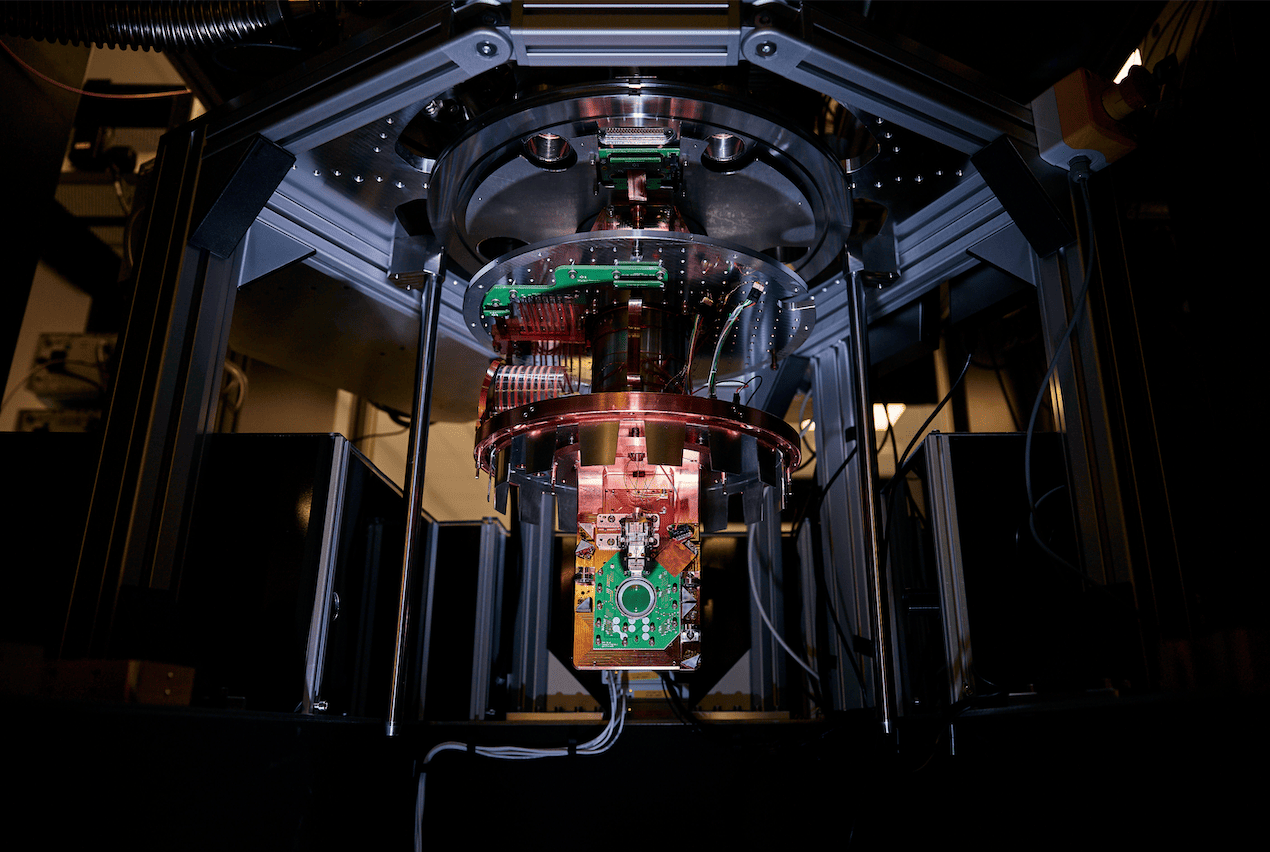
- Image: This photo depicts a current trapped ion system from IonQ. The system to be delivered to Horizon will be IonQ’s next-generation 256-qubit technology
PRESS RELEASE — Horizon Quantum Holdings Ltd. (“Horizon Quantum”), a pioneer of software infrastructure for quantum applications and IonQ — the world’s leading quantum platform company — today announced a strategic agreement. Horizon Quantum will purchase one of IonQ’s first 6th-generation, chip-based 256-qubit trapped-ion systems, in furtherance of Horizon Quantum’s mission to unlock the full potential of quantum computing with its software platform. The acquisition of the 256-qubit system marks a further step in Horizon Quantum’s efforts to enable broad quantum advantage.
IonQ’s 256-qubit system is designed to provide researchers and developers significantly more computing capacity to explore complex problems, with its microwave gate operations and 99.99% gate fidelity, while producing more accurate and reliable solutions using Horizon Quantum’s real-world software infrastructure. The forthcoming IonQ system will be designed so all of its qubits can work together efficiently from its “all-to-all connectivity” and parallel operations enabling a broader range of calculations with greater flexibility.
With this technology, Horizon Quantum plans to expand the capabilities of its quantum hardware testbed beyond the initial superconducting system with a second, technologically distinct hardware modality. Horizon Quantum will be among only a few efforts globally to operate commercial systems of multiple modalities, which will allow Horizon Quantum to make further progress towards its goal of building the most capable, hardware-agnostic environment for quantum software development. Horizon Quantum intends to expand support for trapped-ion systems in Triple Alpha, along with enhancing the real-time runtime capabilities within its execution infrastructure. This is expected to enable advanced functionality, including general control flow, dynamic memory allocation, and concurrent classical/quantum function evaluation, empowering developers to go beyond the limits of static circuit execution and create adaptive, expressive quantum programs. By tightly integrating Triple Alpha with frontier quantum computing systems, Horizon Quantum aims to ensure that its software infrastructure provides developers with the most direct path to broad quantum advantage.
“I could not be more delighted to be working with IonQ to bring trapped ion and world-leading gate fidelities to our testbed,” said Horizon Quantum Founder and CEO Dr Joe Fitzsimons. “Bringing a state-of-the-art system with the capabilities of hundreds of qubits will provide an important and cutting-edge resource to bear in our quest to unlock broad quantum advantage for developers.”