
NSF Names Founding Partners for X-Labs Consortium, With Occam Foundry and Florida Quantum Center Among Them
Insider Brief
- The U.S. National Science Foundation has named the initial founding partners of its new NSF X-Labs Consortium, which it says represents over $300 million in commitments to support X-Labs teams with floor space, instrument access and direct support.
- Partners named so far include the Astera Institute, Ginkgo Bioworks, Tom Secunda and the Secunda Family Foundation, the Alfred P. Sloan Foundation, Matt Cimaglia with Occam Foundry, and the Florida Quantum Center.
- The consortium backs NSF X-Labs, the $1.5 billion, decade-long program funding independent teams of researchers, engineers and entrepreneurs through milestone-based awards, with quantum systems among its first topics.
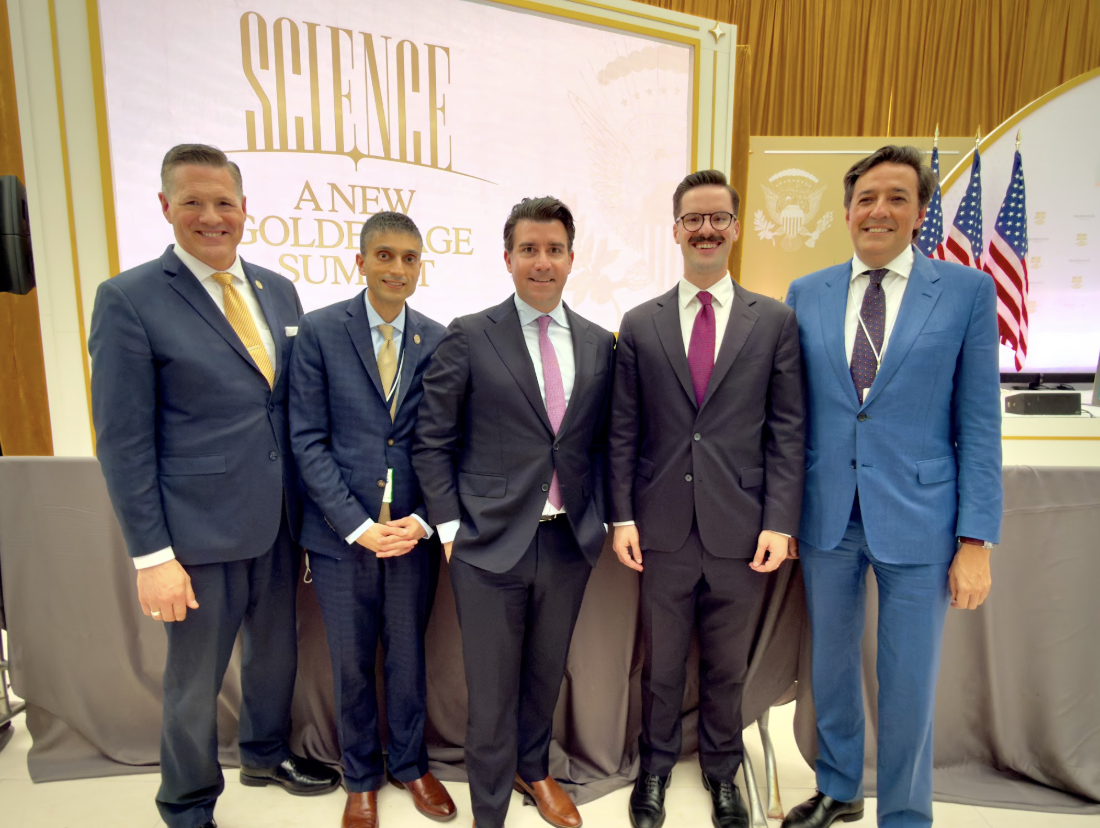
The U.S. National Science Foundation has put names to the founding partners of its new NSF X-Labs Consortium, the private-sector and philanthropic backbone for the agency’s $1.5 billion X-Labs initiative. In a post on X, NSF thanked the Astera Institute, Ginkgo Bioworks, Tom Secunda at the Secunda Family Foundation, the Alfred P. Sloan Foundation and other national philanthropic partners, along with Matt Cimaglia with Occam Foundry and Florida Quantum Center, as the initial group that will help X-Labs stand up what the agency calls a new generation of independent research organizations.
The consortium was announced alongside a broader set of NSF programs tied to the White House report Science: A New Golden Age, including a Quantum+X Grand Research Challenge, an Office of Metascience and new workforce investments. NSF said the founding partners represent more than $300 million in commitments and will support X-Labs teams with floor space, instrument access and direct support.
What the consortium is for
NSF X-Labs, launched in May with $1.5 billion over ten years, funds independent teams of researchers, engineers and entrepreneurs through milestone-based awards under NSF’s Other Transaction authority rather than conventional grants. The teams are meant to operate outside existing academic and corporate structures and carry platform technologies from early prototype to something private capital can scale. Quantum Systems: Interconnects and Integrated Photonics was one of the first two topics, and NSF added three more topics in September.
That model leaves a practical gap. A team that is not housed inside a university or a large company still needs lab space, instruments, fabrication tools and people who know how to run them. The consortium is NSF’s answer: founding partners spanning research institutions, advanced computing centers, philanthropy and industry will provide physical space, scientific instruments and infrastructure, and expertise so that funded teams can start work rather than start building a facility.
The quantum partners
Two of the named partners sit squarely in the quantum ecosystem.
Occam Foundry is the quantum technology campus under development on roughly 16.5 acres in southeastern Travis County, Texas, led by Matt Cimaglia’s Texas Quantum Partners with developer Samara. The campus is designed to co-locate university spinouts, startups and operational quantum hardware next to semiconductor cleanroom fabrication and characterization suites, and earthwork is already underway. Last week the project announced a letter of support from Austin Mayor Kirk Watson and an MOU with the Texas Advanced Computing Center. Cimaglia has described the project as a commercialization center rather than a research park, and X-Labs teams pursuing the quantum systems topic are the kind of tenant it was built for.
Florida Quantum Center is the companion node, and its focus is biomedicine and pharmaceuticals. The center is looking at space near the Herbert Wertheim UF Scripps Institute for Biomedical Innovation & Technology, the Max Planck Florida Institute for Neuroscience and the FAU Stiles-Nicholson Brain Institute, all located on Florida Atlantic University’s Jupiter campus. It is designed as a commercialization hub for drug discovery and life sciences companies. Cimaglia was also a founding member of Florida Quantum, the group organizing the state’s quantum economy. Florida has been building toward a quantum hub along the Treasure Coast and Palm Beach corridor, and the center’s inclusion gives X-Labs a second physical landing spot in a state that is actively courting quantum companies.
The two sites cover different ground. Occam Foundry in Austin anchors applications along with hardware, and the Jupiter campus puts a quantum system to work on molecular simulation and pharmaceutical research. Together they signal that NSF sees the regional quantum campus, with fabrication, instruments and working quantum systems on site, as part of the federal infrastructure for its most ambitious research bets.
The other founding partners
The rest of the initial group brings money and scientific capacity rather than quantum-specific real estate. The Astera Institute, founded by Jed McCaleb, has been one of the main backers of the focused research organization model that X-Labs draws on. Ginkgo Bioworks brings industrial-scale biology automation, a fit for the Synthetic Multicellularity Grand Challenge announced the same day. The Alfred P. Sloan Foundation and Tom Secunda’s Secunda Family Foundation add philanthropic capital, and NSF said other national philanthropic partners are part of the initial commitments.
NSF has not yet published a breakdown of which partner is contributing what toward the $300 million figure, or whether the commitments are cash, in-kind space and instrument access, or a mix. The agency said more detail on all of the new programs will follow in the coming days.