
QuantLase Tests Photonic Computing Platform on Financial Market Data
Insider Brief
- QuantLase says it tested its PIPU photonic computing platform on seven financial market datasets to evaluate how optical dynamics can process changing information and generate predictions.
- The experiments combined physical optical processing with GPU support and included comparisons with an AI forecasting system and a digital simulation of PIPU.
- The announcement provides no numerical results establishing an advantage over conventional methods, and QuantLase plans broader testing and further engineering before external access.
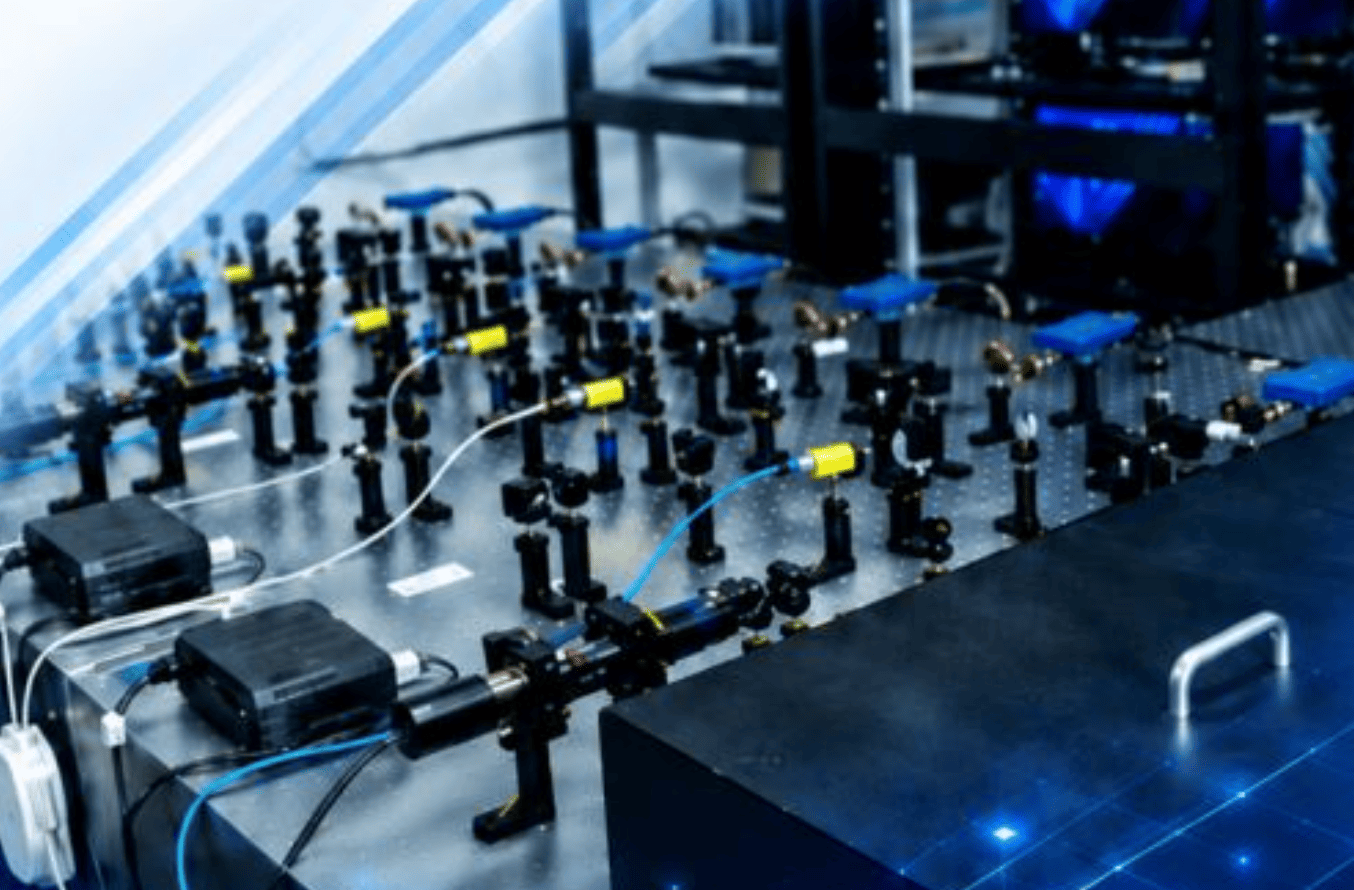
QuantLase Research and Development Center says it has tested an experimental light-based computing platform on seven financial market datasets, examining whether optical dynamics can process complex information that changes over time.
The experiments evaluated how its Photonic Intelligence Processing Unit, or PIPU, followed observed data and generated predictions beyond the supplied data window, according to a blog post. The work extends the center’s research from an initial concept demonstration to tests using real-world information.
QuantLase’s account does not provide numerical accuracy results or establish that the platform outperformed conventional methods. It says a second whitepaper includes quantitative analysis and comparisons with an AI forecasting system and a digital simulation of PIPU.
The datasets covered Apple, Amazon, NVIDIA, JPMorgan Chase, First Abu Dhabi Bank, ADNOC and Reliance Industries. QuantLase says financial data provided a demanding test environment, rather than a foundation for an investment or trading product.
Computing Through Optical Dynamics
PIPU explores whether light’s physical behavior can perform part of a computation rather than simply transmit information between electronic components.
The platform combines coherent light, whose waves maintain a consistent relationship, with equipment that modifies its spatial pattern. Light passes through an optical system, reaches a detector and participates in a feedback loop that influences subsequent behavior.
QuantLase says the system operates near the “edge of chaos,” a regime between highly ordered and chaotic behavior. Researchers are investigating whether this balance allows sensitivity to changing inputs while preserving useful structure in the output.
Each dataset was evaluated within the same broad experimental parameter range, although researchers retained dataset-specific configurations for subsequent processing.
The evaluation first examined how the system followed patterns within observed data. It then entered an autonomous prediction phase, generating a continuing trajectory without additional training during that interval.
Producing a trajectory beyond the input window does not itself establish forecast accuracy, which requires comparison with subsequent observations.
Comparisons and Further Testing
QuantLase compared the experimental results with an AI time-series system operating within a defined short-term testing regime and a graphics processing unit, or GPU, simulation of PIPU’s equations.
The simulation calculated the dynamics digitally. In the physical experiment, optical behavior supplied the photonic transformation, while a GPU supported data handling, electronic control and system interfaces.
QuantLase says the whitepaper includes measures of average behavior, variability and prediction error where applicable. Supporting datasets are also being made available through the research repository Zenodo.
The hybrid architecture underpins a proposed managed service through which users could access photonic processing through digital and cloud interfaces.
However, the account provides no system-level measurements of speed, energy consumption or cost needed to assess practical advantages over digital alternatives.
QuantLase identifies broader datasets, repeated experiments, longer evaluation periods and further engineering as priorities before external access.
Deployment will likely depend on technical readiness and governance under the pathway established by QuantLase and IHC.
For a deeper, more technical dive, please review the whitepaper. It’s important to note that whitepapers allow researchers to receive quick feedback on their work. However, a whitepaper is not — nor is this article, itself — official peer-review publications. Peer-review is an important step in the scientific process to verify results.