
FSU Receives $2.1 Million for Quantum Communication Testbed
Insider Brief
- Florida State University will establish a campus-scale quantum communication testbed with $2.1 million in federal Community Project Funding through NIST.
- The testbed will connect a central quantum communication hub with nodes at the FAMU-FSU College of Engineering and National High Magnetic Field Laboratory to study performance under environmental stresses.
- Researchers will use the platform to test entangled-photon links, monitor reliability and develop quantum networking expertise for real-world operating conditions.
PRESS RELEASE — Florida State University will establish a campus-scale quantum communication testing platform with $2.1 million in federal Community Project Funding through the National Institute of Standards and Technology, secured with support from U.S. Rep. Daniel Webster of Florida’s 11th Congressional District.
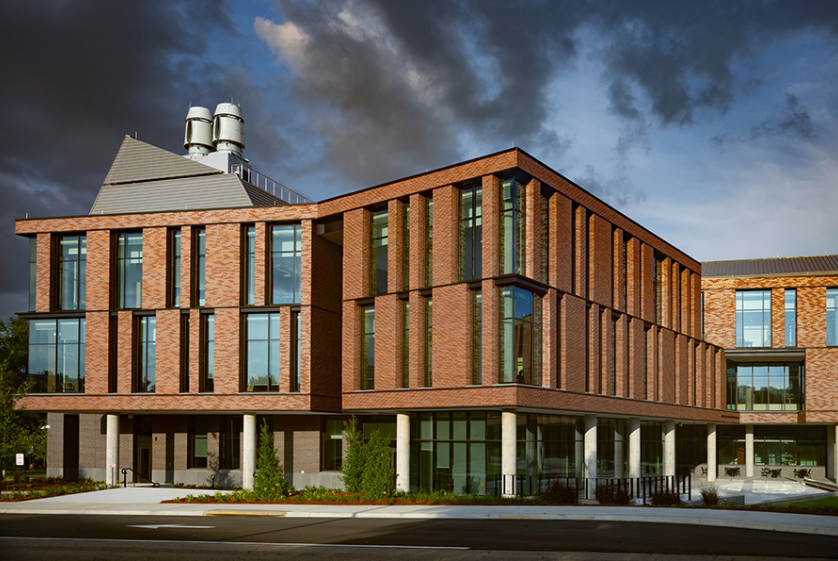
The testbed will link a central quantum communication hub in FSU’s Interdisciplinary Research and Commercialization Building (IRCB) with receiver nodes at the FAMU-FSU College of Engineering and the National High Magnetic Field Laboratory (MagLab). Researchers will study how quantum communication hardware and optical links perform under challenging conditions, including strong air turbulence, high magnetic fields and cryogenic thermal cycling.
Quantum communication uses quantum properties of light, including entanglement, to transmit and protect information in ways that are fundamentally different from conventional networks. A major challenge is moving quantum communication from carefully controlled laboratory demonstrations to reliable systems that can operate in real-world conditions.
“Florida State University leads the nation in quantum science and engineering,” said Rep. Webster. “I fought for this investment in Congress as it will help establish the first quantum communications testbed facility in the southeastern United States. These resources will help expand their important work and strengthen American innovation. Advancements in quantum technology are critical to our national security and will help ensure the United States remains a leader in these emerging technologies as we counter adversaries like China.”
The testbed will connect the hub to the nodes through campus fiber resources. It will generate and distribute entangled photons and monitor measures such as link reliability, allowing researchers to improve system performance. The system will also include reconfigurable optical links so researchers can deliberately expose components and communication channels to controlled environmental stresses.
“The next frontier is not simply demonstrating quantum communication in an ideal laboratory, but understanding how to make these systems reliable in the environments where they will ultimately operate,” said Suvranu De, dean of the FAMU-FSU College of Engineering. “This investment gives us a platform to connect fundamental quantum science with engineering validation, workforce development and future partnerships with government, industry and other universities. It is an important step toward secure and resilient quantum networks that can operate in the real world.”
FSU Expands Quantum Research
The project continues FSU’s commitment to advancing research in quantum science and engineering. Since launching the FSU Quantum Initiative in 2023, the university has hired 10 new faculty members to reach a total of 45 faculty members researching quantum topics, developed Florida’s first graduate credential in quantum information science and engineering, hosted the inaugural Florida Quantum Conference and joined with other universities around the state to establish the Florida Alliance for Quantum Technology.
In July, the U.S. Department of Energy chose FSU to lead four major projects as part of the Genesis Mission, including a project to develop AI that acts as a real-time diagnostic system for quantum computers and another to improve scientists’ understanding of atomic nuclei and other quantum systems.
“This is an important research infrastructure investment that can support future quantum-networking activities and position FSU for larger-scale opportunities,” said Wei Guo, professor of mechanical and aerospace engineering, head of the MagLab’s cryogenics lab and co-director of the FSU Quantum Initiative. “Just as importantly, it will give students and researchers hands-on experience across the full quantum-networking stack, from photons and detectors to controls, data, networks and demanding operating environments.”
For more information about ongoing quantum research at Florida State, visit the FSU Quantum initiative website.