
US Must Pair Quantum Research With Industrial Strategy, UCLA Physicist Argues
Insider Brief
- UCLA physicist Prineha Narang writes in a FT opinion piece that the United States must pair quantum research leadership with domestic manufacturing, procurement and secure supply chains.
- She points to the semiconductor industry as a warning that scientific invention does not guarantee long-term industrial or national security advantages.
- Narang says government purchasing commitments and allied supply-chain coordination could help create the demand and production capacity needed for commercial quantum computing.
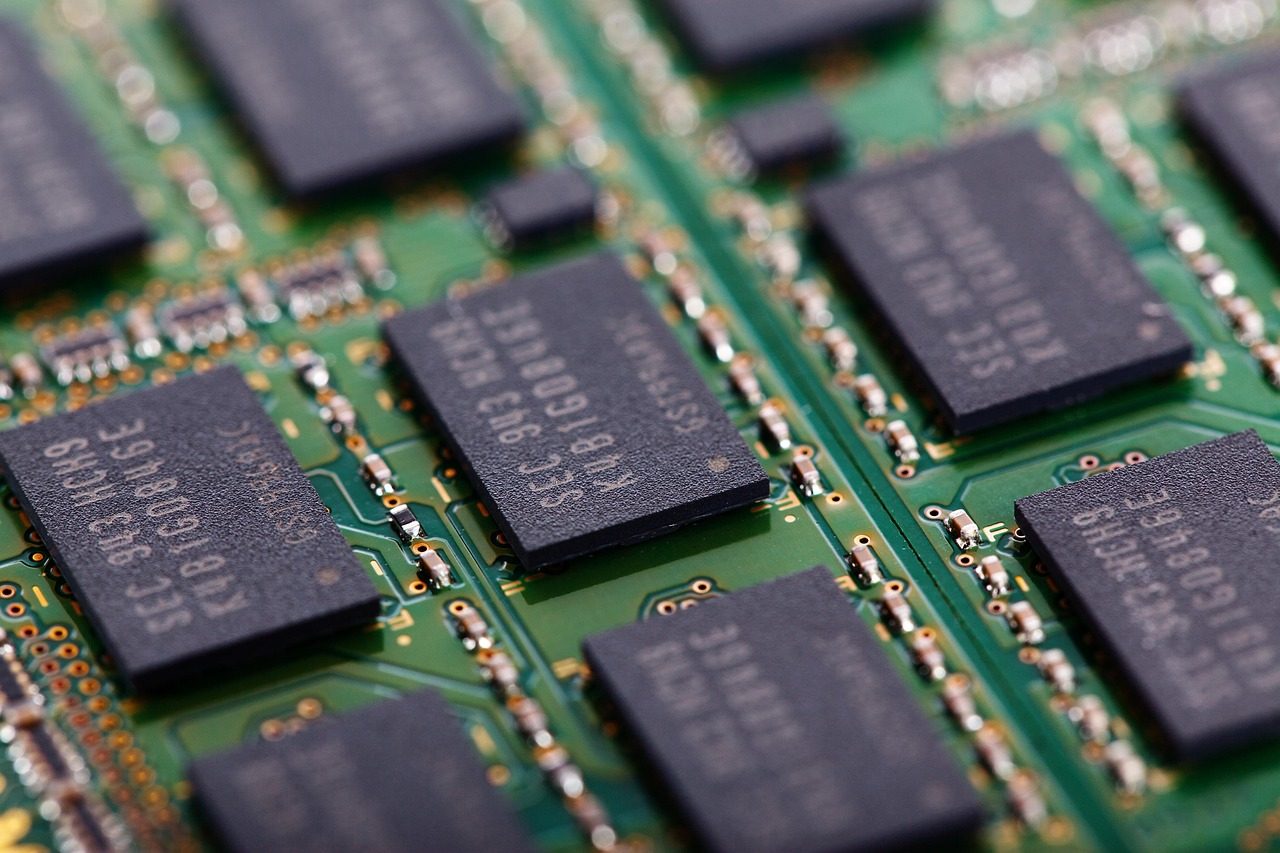
- Photo by PublicDomainPictures on Pixabay
The United States risks repeating one of the biggest strategic mistakes in its technology history unless it pairs quantum computing research leadership with a domestic manufacturing and procurement strategy, according to a Financial Times opinion essay by UCLA physicist Prineha Narang.
Narang, a professor of physical sciences and electrical and computer engineering at the University of California, Los Angeles, writes that American laboratories produced many of the discoveries that underpin modern quantum computing, but scientific leadership alone will not guarantee long-term economic or national security advantages. Instead, she contends that the United States must create a market for quantum technologies while securing the industrial base needed to manufacture them at scale.
In the Financial Times essay, Narang points to three foundational advances that originated in U.S. research, including the transistor, the superconducting transmon qubit and Shor’s algorithm, which is the quantum algorithm that demonstrated how a sufficiently powerful quantum computer could efficiently factor large numbers. Those breakthroughs helped establish the scientific foundations of the field, but she writes that they do not ensure that future commercial production or supply chains will remain in the United States.
“This has happened before,” writes Narang. “After America invented the transistor, it watched semiconductor manufacturing migrate to Asia, ceding the most strategic supply chain on Earth. Quantum technology carries the same structural risk.”
According to Narang, quantum technologies face similar structural risks if policymakers focus primarily on research while overlooking manufacturing capacity and commercial deployment.
The essay praises two executive orders issued earlier this year by President Donald Trump that elevate quantum technology as both an economic opportunity and a national security priority. One order identifies quantum technologies as a transformational capability for American innovation, while another addresses the migration to post-quantum cryptography as governments prepare for future quantum computers capable of breaking some widely used encryption systems.
While venture capital has flowed into the sector and several quantum companies have reached the public markets, Narang writes that investment alone is insufficient. Instead, she says the industry needs a dependable early customer similar to the role that defense and space procurement played during the rise of the semiconductor industry. According to the FT piece, government purchasing commitments could provide the demand signal needed to help quantum hardware developers transition from research programs into sustainable commercial businesses.
The Department of Energy‘s planned role as an early purchaser of scientifically relevant quantum computers, together with potential advance market commitments by the Department of Commerce, could help provide that foundation, Narang writes. She adds that government procurement can reduce investment risk while encouraging private companies to expand manufacturing capacity inside the United States.
Beyond procurement, Narang says that quantum leadership will depend on securing critical supply chains. Quantum computers rely on specialized components ranging from cryogenic cooling systems to advanced materials, wafer fabrication and rare earth elements. No single nation currently controls every part of that technology stack, making cooperation among allied countries an important part of long-term industrial strategy, according to Narang.
“Washington has signalled co-operation and credibility,” writes Narang. “If fault-tolerant, utility-scale quantum computers can be built, bought and manufactured within an allied supply chain then America will keep the industry it invented.”