
South Korea Expands Quantum Cooperation With Canada, U.K. and EU at Quantum Korea 2026
Insider Brief
- South Korea held quantum cooperation talks with Canada, the United Kingdom and the European Union during Quantum Korea 2026 in Seoul.
- The Canada talks focused on joint research and personnel exchanges in quantum science.
- The U.K. and EU meetings focused on commercialization, verification, standardization and expanded research cooperation.
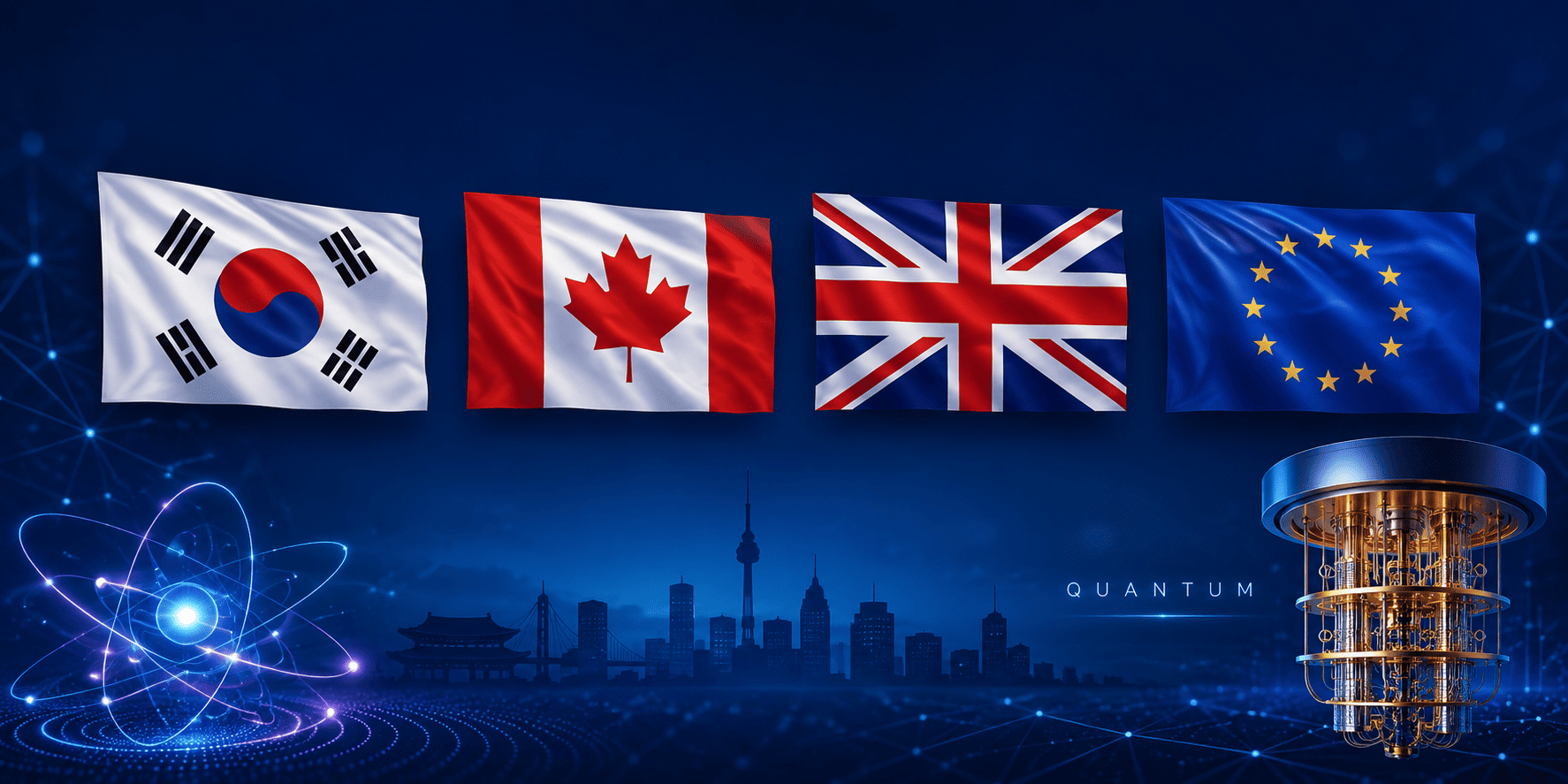
South Korea used this week’s Quantum Korea 2026 conference to deepen international cooperation on quantum technology, holding separate high-level meetings with officials from Canada, the United Kingdom and the European Union to discuss joint research, commercialization and workforce exchanges, according to Yonhap News Agency.
The meetings took place alongside Quantum Korea 2026, a three-day conference hosted by South Korea’s Ministry of Science and ICT that opened Thursday and runs through Saturday in central Seoul. According to Yonhap News Agency, South Korea’s largest news agency and the country’s primary wire service, the event brings together researchers, companies and government officials to examine global developments in quantum science and technology.
The ministry said that each meeting focused on different areas of cooperation, reflecting the growing emphasis on international partnerships as countries seek to accelerate quantum research and prepare the technology for commercial use.
“The government will materialize cooperation in areas such as joint research and commercialization, building on the Quantum Korea event, to actively support our researchers and companies, so their bold endeavors could lead to new growth momentum leading the world market,” the ministry said, according to Yonhap News Agency.
Canada Talks Focus on Research and Talent
According to the news agency, South Korean officials met with government and science representatives from Canada to discuss expanding joint research and development projects in quantum science.
The talks also addressed personnel exchanges, highlighting the importance of developing a skilled workforce in a field where researchers and engineers remain in short supply worldwide. International research partnerships have become increasingly common as quantum projects often require expertise across physics, engineering, computer science and materials research.
U.K. Meeting Centers on Commercialization
Discussions with officials from the United Kingdom focused on moving quantum computing technologies closer to practical deployment.
According to Yonhap News Agency, the two sides explored ways to expand cooperation in commercialization, technology verification and standardization.
Commercialization refers to the process of turning laboratory research into products and services that customers can use. Verification involves confirming that quantum systems perform as intended, while standardization establishes common technical guidelines that allow equipment, software and testing methods to work consistently across organizations and countries.
Such standards are increasingly viewed as important as governments and industry prepare for broader adoption of quantum technologies.
EU Discussions Build on Recent Agreement
South Korea also held talks with quantum policy officials from the European Union to advance commitments made during President Lee Jae Myung’s visit to the EU last month.
According to the news agency, the discussions focused on implementing an agreement reached during that visit to expand joint research and expert exchanges in future industries, including quantum technologies.
The follow-up meeting signals an effort to move beyond broad policy commitments toward concrete collaborative projects between South Korean and European researchers and institutions.
The series of meetings also reflects South Korea’s broader strategy of strengthening international partnerships in quantum science, an area that governments increasingly view as strategically important for future computing, secure communications and advanced sensing technologies.