30 Talks From Historic Helgoland Quantum Conference Released Online
Insider Brief
- The New Quantum Era released recordings of 30 lectures from a Helgoland conference that marked the approaching 100th anniversary of modern quantum mechanics.
- The gathering on Helgoland — where Werner Heisenberg formulated matrix mechanics — brought together leading physicists including Christopher Fuchs, Juan Maldacena, John Preskill and Ignacio Cirac to discuss quantum foundations, computing, sensing and gravity.
- The event was also filmed for a documentary currently in post-production that will capture the historic gathering of researchers reflecting on quantum science’s past and future nearly a century after its origin.
A series of lectures delivered in 2019 during a conference marking the approaching 100th anniversary of modern quantum mechanics has been released online by The New Quantum Era, an independent media and advisory practice founded by Sebastian Hassinger that focuses on explaining quantum technology to broader audiences.
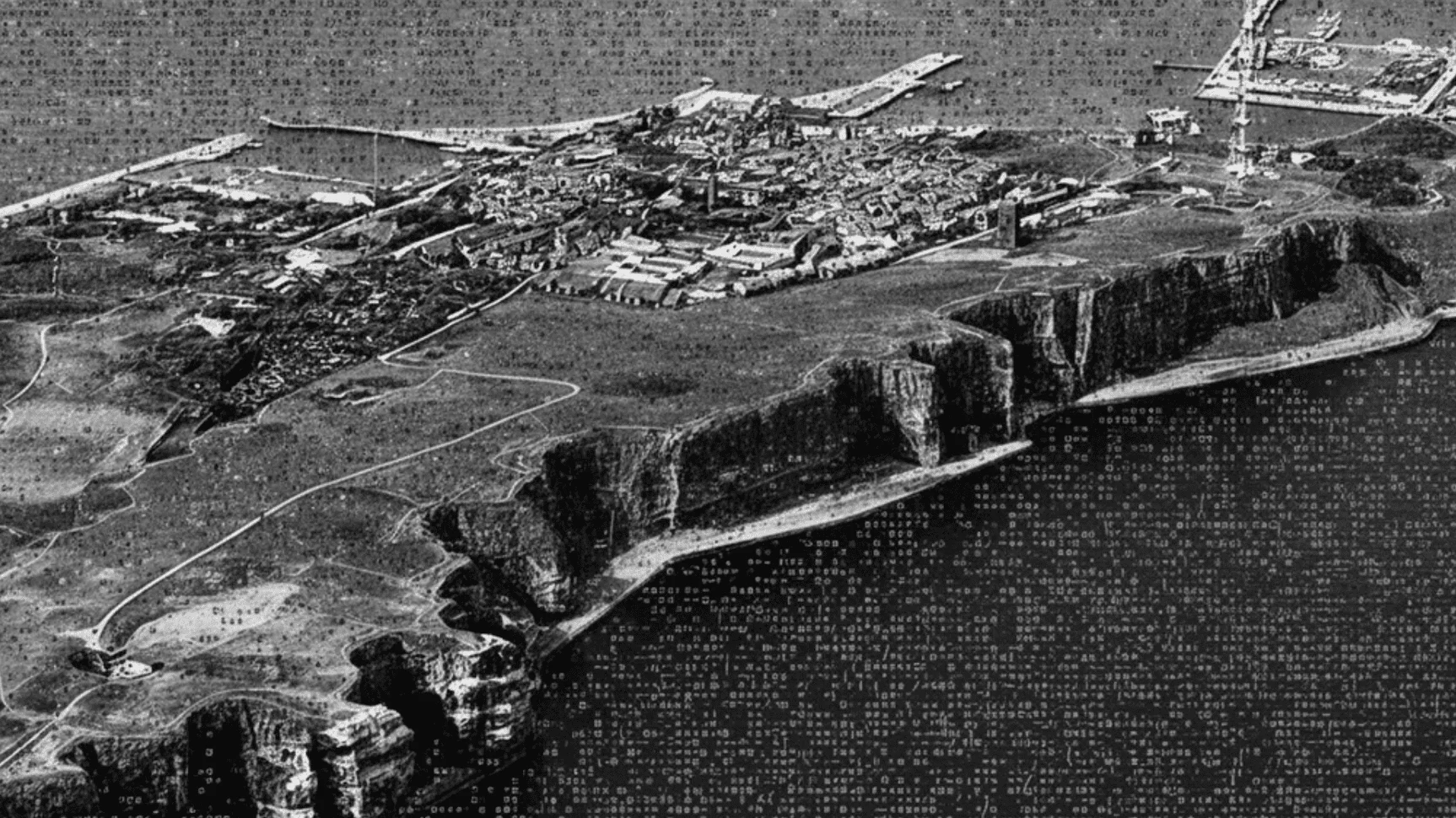
Thirty talks recorded during the gathering on the German island of Helgoland — the place where Werner Heisenberg developed the mathematical framework of quantum mechanics in 1925 — are now available on the New Quantum Era YouTube channel. The recordings capture presentations from many of the scientists whose work has shaped the modern quantum field, spanning topics from foundational theory to emerging quantum technologies.
The conference itself was organized by physicists from Yale University and several Max Planck Institutes. Organizers including Jack Harris, Florian Marquardt, Steve Girvin and Časlav Brukner set out to commemorate the centennial of Heisenberg’s breakthrough by holding the event on Helgoland, where the young physicist retreated in the summer of 1925 to recover from severe hay fever and, in the process, developed matrix mechanics — the first consistent formulation of quantum theory.
The resulting gathering brought together Nobel laureates, pioneers of quantum information science and younger researchers working across multiple areas of the field. The talks were delivered at the Nordseehalle conference venue on the island.
“Originally I was just going to record a podcast, but when the enormity of the event dawned on me I realized I was going to do something bigger,” said Hassinger. “The conference was an amazing experience, opening with a perspective of 100 years of quantum physics and closing on the next 100 years of quantum technologies. We hope to produce a documentary that does justice to that vast scope.”
Ilyas Khan, founder of Cambridge Quantum and currently head of special projects at Quantinuum, served as executive producer of the project.
“When Sebastian came up with the idea of filming the historic Helgoland Conference with high production values, and absolute editorial freedom with no constraints from having to be sponsored, I had no hesitation in supporting him,” said Khan, in an email interview. “I am so proud of being executive producer of this wonderful set of legacy talks which celebrate 100 years of Quantum Mechanics.”
The Breadth of Modern Quantum Research
The Helgoland program reflects the breadth of modern quantum research, according to the blog post. Several presentations explored the history and interpretation of the theory itself. Elise Crull and Douglas Stone discussed the historical development of quantum mechanics, while science writer Philip Ball examined how interpretations of the theory have evolved over the past century. Christopher Fuchs presented ideas related to QBism, an interpretation that treats quantum theory primarily as a framework for reasoning about probabilities.
Other speakers addressed phenomena that underpin modern quantum technologies. Nicolas Gisin spoke about quantum nonlocality and its implications for cryptography and secure communications. Ignacio Cirac and Peter Zoller revisited their influential 1995 proposal for trapped-ion quantum computing, a paper widely viewed as launching the modern field of quantum information science.
Several talks highlighted experimental advances that have pushed quantum physics into practical applications. Jun Ye described progress in ultra-precise optical clocks based on strontium atoms, devices capable of measuring time with extraordinary accuracy. Nergis Mavalvala discussed quantum measurement techniques that enabled the detection of gravitational waves. Rainer Blatt presented developments in trapped-ion quantum computers, while Nathalie de Leon discussed diamond-based quantum systems used for sensing and information processing.
The conference also featured research into unusual quantum phases of matter and frontier theoretical questions. Vedika Khemani spoke about time crystals, systems that exhibit periodic behavior in time rather than space. Other talks explored quantum gravity and the relationship between quantum theory and cosmology.
Beyond the technical content, the event provided a rare opportunity for researchers across different subfields to reflect on the trajectory of quantum science as the discipline approaches its centennial milestone.
The Helgoland gathering is also the subject of a forthcoming documentary film currently in post-production, Hassinger writes.
A small film crew documented the six-day conference on the island, capturing lectures, conversations and scenes from the historic location where Heisenberg’s ideas first reshaped physics. The documentary is expected to be released later this year.