
SKKU Signs MoU With Classiq Technologies
Insider Brief
- Sungkyunkwan University’s Quantum Information Research Support Center signed an MOU with Israel-based Classiq Technologies to advance quantum computing education and launched Korea’s first open training program using the Classiq software platform.
- The agreement marks the Center’s first partnership focused exclusively on quantum software and builds on its cloud-based workforce programs with global hardware providers including IBM, IonQ, D-Wave and Pasqal.
- The collaboration will support joint industry–academia programs and talent development, as SKKU begins a new five-year government-backed term to strengthen Korea’s software-centered quantum ecosystem and expand domestic capabilities in quantum algorithm engineering.
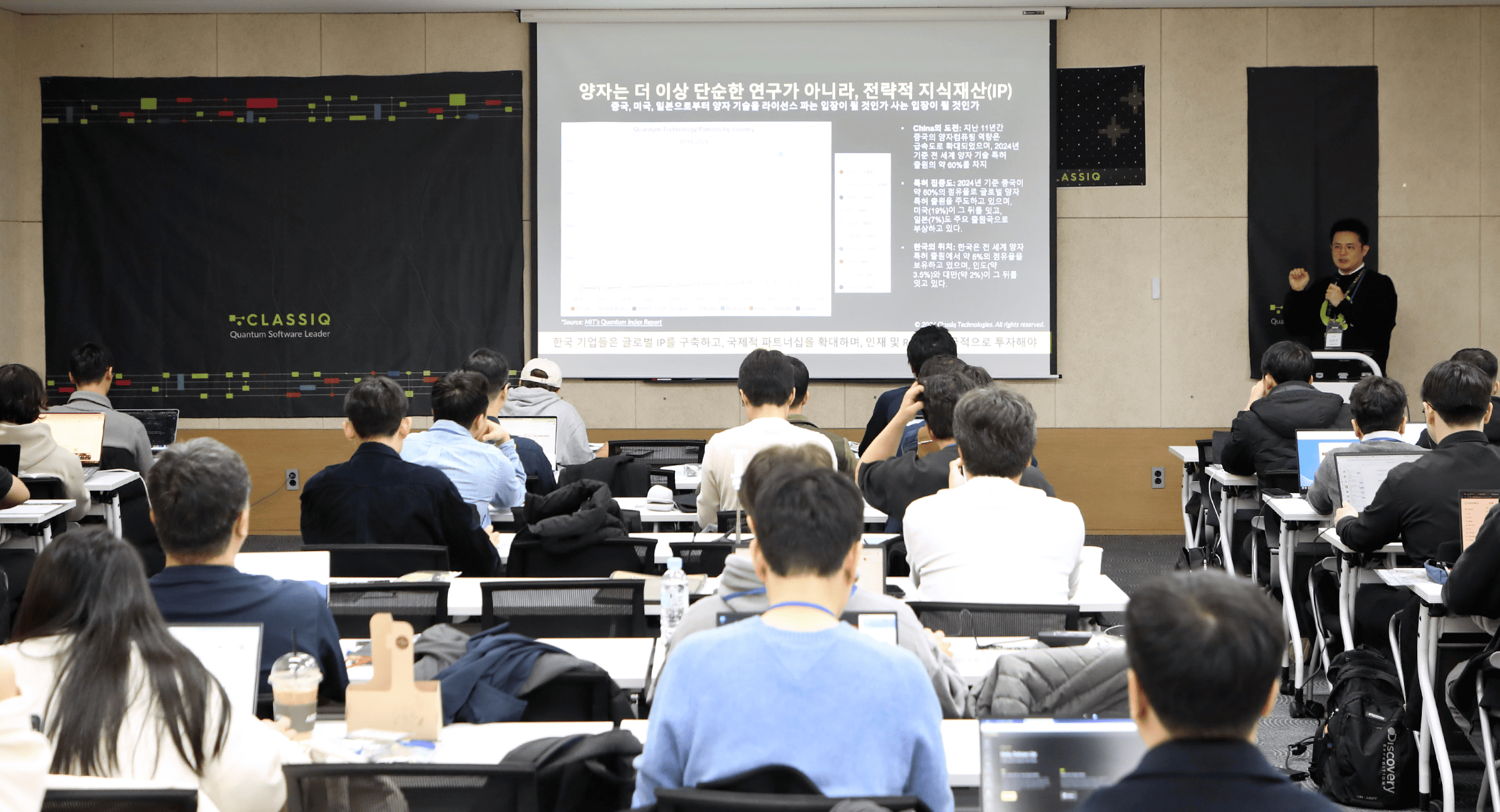
- Image: Photo from the training session (Kim Sungjin, Director at Classiq Technologies, conducting the program.)
PRESS RELEASE — The Quantum Information Research Support Center (Director: Youngwook Chung, Professor of Quantum Information Engineering) signed a memorandum of understanding (MOU) with Classiq Technologies (Classiq), a global quantum algorithm design and optimization platform company, to promote cooperation in quantum computing education. The Center also hosted Korea’s first open education program based on the Classiq platform.
Since its establishment in August 2020, the Quantum Information Research Support Center (the “Center”) has continuously operated cloud-based quantum computing workforce training programs in collaboration with global quantum hardware companies, including IBM, IonQ, D-Wave, and Pasqal. This agreement is particularly significant as it marks the Center’s first educational partnership with a company specializing exclusively in quantum computing software.
Headquartered in Israel, Classiq is a quantum software company that supports the practical application of quantum computing in industry. Its platform provides technology that automatically designs and converts high-level functional models into optimized quantum circuits executable on hardware. This enables developers to design and implement quantum algorithms without requiring in-depth knowledge of complex hardware architectures.
Classiq introduced the industry’s first high-level modeling language, “Qmod,” and established a compiler technology based on an automatic synthesis engine. This technology contributes to reducing execution costs by decreasing the number of quantum gates by up to 98% while maintaining circuit accuracy. The company also provides its quantum computing platform to global enterprises such as BMW Group, Comcast, Rolls-Royce, SoftBank, and LG CNS. In addition, it was recognized by Fast Company as a recipient of the “Next Big Thing in Tech 2025” award.
Through this MOU, the two institutions agreed to pursue strategic cooperation in the following areas: fostering quantum computing professionals; developing joint industry–academia–research education and research programs; and strengthening the competitiveness of Korea’s quantum ecosystem.
The training program was held on Thursday, February 26, 2026, from 9:30 a.m. to 5:30 p.m. at Sangyeonjae in Seoul Square. A total of 50 participants attended, including representatives from industry, academia, and research institutions, as well as graduate students. The Center reported that participants with diverse levels of experience in the quantum field took part in the program and that strong interest and demand for the Classiq platform were confirmed.
Director Youngwook Chung stated, “This agreement will serve as a turning point in accelerating the expansion of a software-centered quantum ecosystem.” He added, “Sungkyunkwan University will continue to cultivate talent capable of leading the practical industrial application of quantum computing through collaboration with global companies and will further strengthen its role as a leading education and research support hub for Korea’s quantum research and industrial ecosystem.”
Akira Tanaka, Head of Asia-Pacific (APAC) Business at Classiq, remarked, “Excluding China, Korea, along with Japan, is a key market in the Asia-Pacific region where quantum technologies are advancing rapidly.” He continued, “Through our collaboration with Sungkyunkwan University, we plan to significantly expand our domestic business operations and strategic partnerships starting this year.” He further noted, “Following the appointment of a Korea Country Manager last year, we are strengthening our domestic capabilities this year by hiring quantum algorithm engineers.”
Meanwhile, SKKU has been selected for the Ministry of Science and ICT’s “2026 Quantum Information Science Human Infrastructure Development Project – Quantum Information Research Support Center” initiative. Building on the workforce development achievements accumulated through its previous projects, the University has embarked on a new five-year term. Over the next five years, it plans to further advance a virtuous cycle research ecosystem in quantum information science, attract and nurture outstanding domestic and international talent, and actively expand programs and opportunities for the training of highly skilled professionals.