
Guest Post: A Quantum Chip, Remote Eye Care And The Business of Preventing Blindness
Guest Post by Quantum Exponential
In parts of remote Australia, people can wait months for specialist eye scans — or travel hundreds of kilometres to reach a suitable scanner. For some, that delay is the difference between a condition that can be treated and sight that is lost.
Diseases such as diabetic retinopathy, macular degeneration and cataracts are routinely detected in urban clinics using optical coherence tomography (OCT), an imaging technique that reveals the internal structure of the eye. But conventional OCT machines are large, fragile and expensive. They are designed for hospitals, not dirt roads, community clinics or mobile health vans.
The consequences fall unevenly. Aboriginal and Torres Strait Islander people experience vision impairment and blindness at around three times the national rate. Cataracts occur far more frequently. Trachoma, a disease largely eliminated in most developed nations, still affects children in some remote communities. An estimated 90 to 94 per cent of this vision loss is preventable or treatable if caught early.
Closing this gap is less about discovering new medicine than about making existing diagnostics reachable.
Useful technology beats perfect understanding
Quantum Exponential, a UK-based firm that backs early-stage quantum and quantum-adjacent companies, does not expect patients, clinicians or investors to understand quantum physics.
“We don’t need everyone to have a PhD in quantum physics,” the firm says. “Most people don’t know how an MRI scanner works either. What matters is whether the device is reliable, affordable and improves outcomes.”
The firm looks first at whether a technology solves a real problem in the real world, before worrying about how elegant the science might be.
Siloton, a UK-based photonics company backed by Quantum Exponential, is one example.
Miniaturising a gold-standard diagnostic
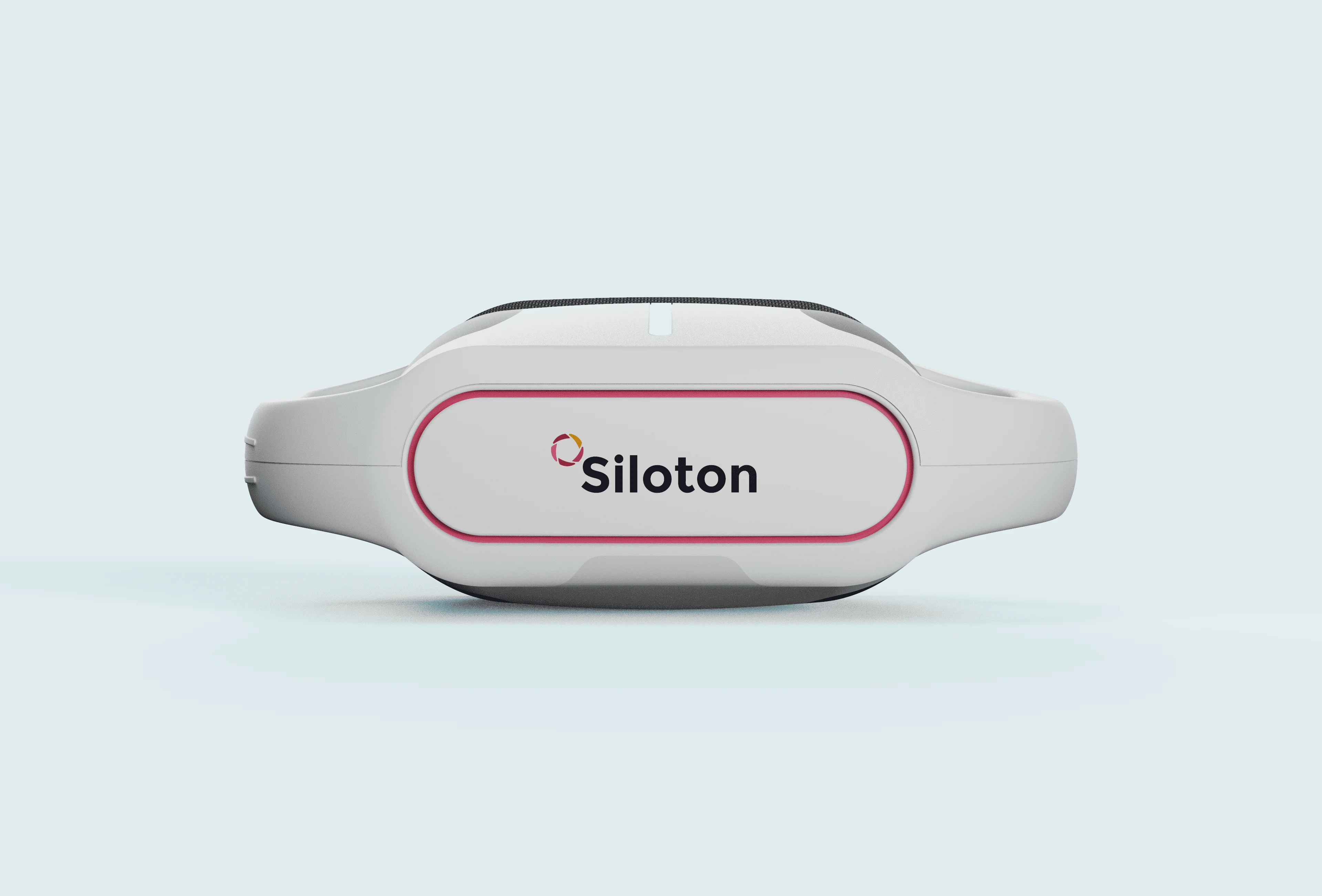
Siloton has developed a chip-based system that compresses the core components of OCT into a solid-state photonic device. By replacing mechanical parts with integrated photonics, the company has produced an imaging platform that is smaller, more robust and better suited to harsh environments.
The system is described as quantum-enabled because it draws on optical coherence and interference effects used in a growing class of quantum sensing technologies. For users, however, the distinction is largely academic. The value lies in what the device does: generate high-quality images in a portable form.
Siloton says it has captured what it believes are the world’s first patient eye images using a photonic chip, showing that clinical-grade imaging can be delivered without a conventional tabletop machine.
“If we can bring imaging to the patient instead of the patient to the scanner, we catch disease earlier,” says one clinician involved in the Project Ginan team. “That alone can change outcomes.”
From laboratory to community clinics
Siloton has sold two chip modules and a complete chip-based OCT imaging system to Project Ginan, an Australian consortium led by Angel Eyecare in partnership with CSIRO and the Lions Eye Institute. The equipment will undergo environmental testing before being used in imaging demonstrations in remote communities.
Angel Eyecare, which is 100 per cent Indigenous-owned, is leading culturally informed focus groups to guide how the service is designed and delivered. The aim is to support local health workers, reduce the need for long-distance travel and ensure services reflect community priorities.
In practical terms, this means more screening done locally, fewer referrals that require long journeys, and earlier decisions about treatment.
For healthcare systems, the case is straightforward. Earlier diagnosis leads to earlier treatment, which reduces the long-term costs associated with avoidable blindness. For patients, it can mean maintaining independence, employment and quality of life.
Commercial traction in extreme environments
Siloton’s technology has also found customers in space.
The European Space Agency uses the company’s photonic approach to monitor astronaut eye health during long-duration missions, where fluid shifts and microgravity can affect vision. These deployments provide validation in some of the most demanding conditions imaginable.
The company has achieved ISO 13485 certification, the quality management standard for medical device manufacturers, and is building its system around a chip-based architecture that can be manufactured using established photonics processes.
Beyond remote healthcare, potential markets include defence, humanitarian operations, ageing populations and mobile diagnostics.
Where impact meets investability
For Quantum Exponential, Siloton reflects the kind of company it wants to back: one with technology that already works, customers who are using it, and a problem worth solving.
Preventable blindness remains one of the most solvable global health challenges. Tools that make diagnosis portable do not require breakthroughs in biology — they require engineering that works outside perfect conditions.
Project Ginan takes its name from a star in the Southern Cross recognised by the Wardaman people as a vessel of knowledge and continuity. The project’s ambition is practical rather than symbolic: to bring clinically meaningful diagnostics closer to where people live.
Quantum technology is often framed as distant and abstract. Increasingly, it is embedded inside devices that look familiar, behave predictably and can go unnoticed despite wielding mighty potential.
In this case, success will not be measured in technical jargon, but in something simpler: fewer people losing their sight because a scan arrived in time.