
Quantum Machine Learning Is Emerging as a Practical Tool for Drug Discovery
Insider Brief
- Quantum machine learning is emerging as a complementary tool in drug discovery, where hybrid classical–quantum algorithms are being explored to address molecular modeling, optimization, and generative design challenges that strain classical AI.
- Research led by scientists at Insilico Medicine shows how QML methods could be applied across the drug pipeline, including property prediction, molecular optimization, and candidate generation, primarily through variational, noise-tolerant approaches suited to current hardware.
- While early results are limited to small-scale demonstrations, the study concludes that targeted QML subroutines embedded in classical workflows may become practical as quantum hardware, error mitigation, and data-encoding techniques improve.
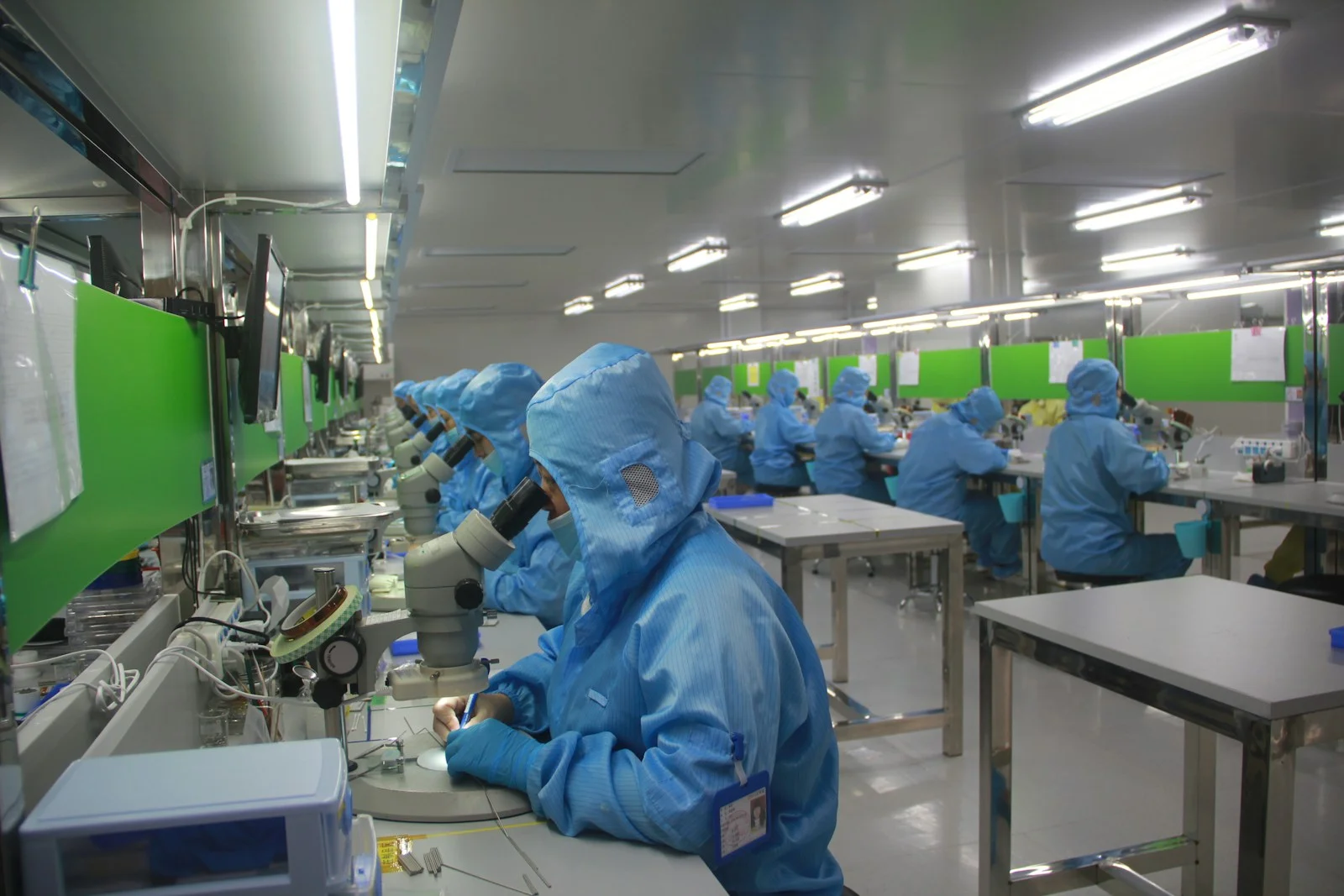
- Photo by Glsun Mall on Unsplash
Quantum machine learning is moving from theory into early, targeted use across the drug development pipeline, where it aims to complement classical AI by handling molecular complexity that strains today’s computers.
That assessment emerges from Drug Discovery with Quantum Machine Learning, a chapter written by a team of Insilico Medicine scientists, which surveys how quantum-enhanced algorithms could accelerate molecular modeling, optimization and generative design as quantum hardware matures. The chapter frames quantum machine learning, or QML, not as a wholesale replacement for classical AI, but as a specialized layer designed to work within hybrid classical–quantum workflows as hardware improves over the coming decade. QML Study
At its core, QML adapts familiar machine-learning ideas — classification, clustering, optimization and generation — to quantum systems, according to the researchers. Instead of processing data as conventional numbers, these methods encode information into quantum states, allowing algorithms to explore many configurations at once through superposition and entanglement. The promise lies in tackling problems where the number of relevant molecular interactions grows too quickly for classical approaches to manage efficiently.
What is Quantum Machine Learning?
Quantum machine learning refers to algorithms that combine quantum computing with machine-learning principles. Most current QML approaches in practice rely on variational quantum algorithms, which split work between a quantum processor and a classical optimizer.
The quantum device prepares and measures quantum states using parameterized circuits, while a classical computer adjusts those parameters to improve performance. This hybrid structure is designed for today’s noisy, intermediate-scale quantum hardware rather than future fault-tolerant systems.
Drug discovery is a natural testing ground for this approach because molecular systems are inherently quantum mechanical. Electrons interact, bonds form and break and small structural changes can produce large functional effects. Classical machine learning has delivered gains by learning patterns from chemical data, but it still relies on approximations to represent quantum behavior. QML attempts to model parts of that behavior more directly.
The chapter outlines several QML families relevant to drug research, including quantum kernel methods for classification, quantum neural networks for feature learning and quantum generative models for molecule creation. While these methods remain limited in scale, the researchers assert they already map well onto specific bottlenecks in drug pipelines.
Where QML Fits Into the Drug Discovery Pipeline
The team organizes QML use cases around distinct stages of drug development rather than treating it as a single monolithic tool.
Molecular representation and property prediction are early targets. Quantum classifiers and kernel methods can be used to distinguish active from inactive compounds or predict properties such as binding affinity. These methods encode molecular descriptors into quantum states, potentially allowing models to separate complex chemical classes that are difficult for classical methods to distinguish. In other words, researchers using these methods can translate information about a molecule into a form a quantum computer can work with.
Optimization tasks form another major category. Drug discovery involves repeated searches through enormous design spaces, optimizing molecular structures, docking poses, or reaction pathways. Variational algorithms such as the Quantum Approximate Optimization Algorithm can frame these challenges as energy-minimization problems, where quantum effects help explore rugged solution landscapes more efficiently.
Generative molecule design is a third focus area. Quantum generative models, including quantum generative adversarial networks, are designed to sample from vast chemical spaces. For this category, QML is positioned as a way to generate candidate molecules that satisfy multiple constraints simultaneously, such as potency, stability and synthesizability.
Dimensionality reduction and denoising also fit into the QML-enhanced pipeline. Quantum autoencoders can compress high-dimensional molecular data into smaller representations, which may help reduce noise and improve downstream learning tasks when datasets are limited or incomplete.
Across these stages, the chapter emphasizes that QML is best suited to hybrid workflows, where quantum models augment — rather than replace — classical AI systems already deployed in pharmaceutical research.
Early Case Studies and Experimental Results
The chapter highlights proof-of-concept demonstrations rather than large-scale production deployments. These include small-molecule simulations using variational quantum eigensolvers, quantum-enhanced classifiers tested on chemical datasets and early experiments in quantum-assisted molecular generation.
In molecular simulation, variational methods have been used to estimate ground-state energies of simple molecules, demonstrating that quantum circuits can reproduce results from quantum chemistry calculations at small scales. While these experiments remain far from modeling drug-sized molecules, they establish a technical foundation for future applications.
In machine-learning tasks, quantum classifiers and kernel methods have been tested on synthetic and reduced chemical datasets, showing that quantum feature spaces can separate data in ways that mirror — and in some cases outperform — classical approaches under controlled conditions.
Generative models represent a more exploratory frontier. Quantum GANs have been proposed as a way to sample chemical distributions that are difficult to capture classically, although current demonstrations remain limited by hardware size and noise.
The researchers present these case studies cautiously, framing them as indicators of feasibility rather than evidence of near-term superiority.
Limitations, Risks and Future Directions
Despite its promise, QML faces limitations and will require more work in order to fully exploit for drug discover, the researchers suggest. The chapter identifies several that are particularly relevant for drug discovery.
Hardware limitations — Current quantum processors support only small numbers of qubits with limited coherence times, restricting the size and depth of usable models.
Data encoding challenges — Translating molecular data into quantum states efficiently is nontrivial and in many cases the cost of data preparation can erase theoretical speedups.
Training instability — Many QML models suffer from optimization landscapes that flatten as circuits grow, making learning difficult. This phenomenon, known as barren plateaus, limits scalability unless architectures are carefully designed.
Uncertain advantage — The team reports that quantum speedups are problem-specific and cannot be assumed across all drug discovery tasks. In many cases, classical AI may remain faster and more practical for years to come.
The chapter points to several directions likely to shape progress. Advances in error correction and qubit quality are essential. Equally important is algorithm design that accounts for noise, limited circuit depth and hybrid execution. The researchers further suggest that the most promising near-term path lies in targeted quantum subroutines embedded within classical drug discovery platforms, rather than end-to-end quantum pipelines.
Insilico Medicine is a clinical-stage biotechnology company that uses generative artificial intelligence to speed up and improve drug discovery and development, applying advanced machine-learning systems to identify biological targets, design novel molecules and advance candidates toward human trials. It has developed an end-to-end AI platform aimed at reducing time and cost in pharmaceutical R&D and advancing treatments across areas such as cancer, fibrosis and aging-related diseases.
The Insilico Medicine scientists involved in this chapter include: Alexey Pyrkov, Alex Aliper, Dmitry Bezrukov and Alex Zhavoronkov.